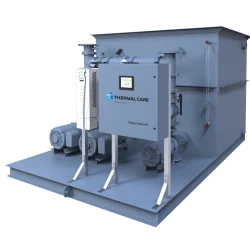
Brewery & Distillery Glycol Chillers
Which type of cooling equipment is correct for your application? Count on Thermal Care application specialists to understand your process and help you find the right chiller for your specific needs to help minimize investment and ongoing energy costs.
There are several important factors to consider when selecting a brewery chiller, chillers for wineries, or chillers for distilleries, including brew house capacity, quantity and BBL for the fermentation tanks, quantity and BBL for the brite tanks as well as the wort cooling.


User friendly PLC control system provides intuitive operation, advanced diagnostics, and precise temperature control of fermentation tanks, bright tanks, and conditioning tanks.

Allows flexibility to accommodate valuable production floor space.

High fluid flow rate promotes maximum heat transfer and can provide temperatures from 20°F to 30°F (-7°C to -1°C) to ensure product quality.
Why a Glycol Chiller ?
While glycol is not as efficient of a heat transfer medium as water and also reduces pumping capabilities, it does provide freeze protection for the cooling system. Thermal Care recommends using a gycol solution whenever process water set point temperatures drop below 45°F.
You might wonder why you need freeze protection starting at such a high process water set point temperature? You must keep in mind that the refrigerant temperatures will be 10°F to 15°F below the glycol chiller's process set point. Since most breweries and distilleries operate with process set point temperatures at 25°F to 27°F they will see refrigerant temperatures of around 10°F to 15°F. Maintaining the appropriate percentage of food grade glycol will ensure appropriate freeze protection.
Join Us

Thermal Care - Booth TBD
The Pennsylvania Convention Center
Philadelphia, PA
Custom Production Chilling Solutions
It is very important to use high quality inhibited food grade glycol such as a propylene glycol and at the manufacturer's recommended percentages for the lowest set point temperatures. Inhibited glycols are the preferred solution and contain additives to help prevent the formation of scale and corrosion and protect metals in the system. Insufficient percentages of glycol in the system could lead to freezing or rupturing of the chillers evaporator and too much glycol will drastically reduce the efficiency of the chiller system.
While there are many inexpensive glycol based solutions such as automotive or RV rated antifreeze, these are not designed for a glycol chiller's recirculation system, and can breakdown causing damage to the heat exchangers and pumps in the system.
Thermal Care’s brewery and distillery chillers have a high fluid flow that promotes maximum heat transfer for better product cooling and can provide temperatures from 20°F to 30°F, highlighting Thermal Care’s more than 50 years of chiller design experience.
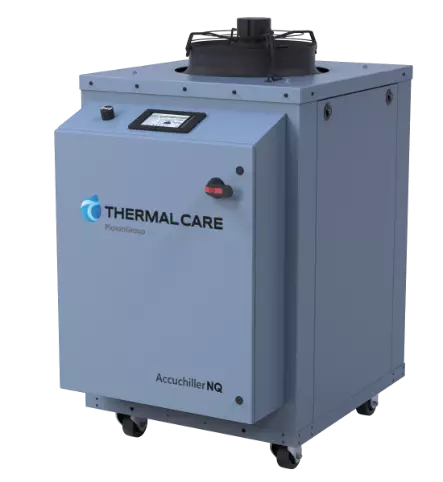
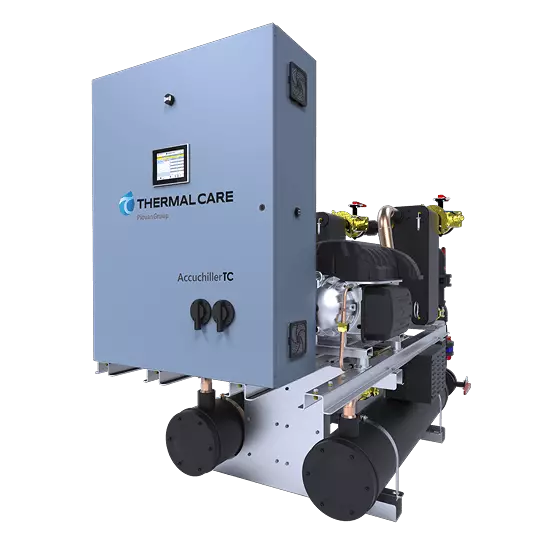
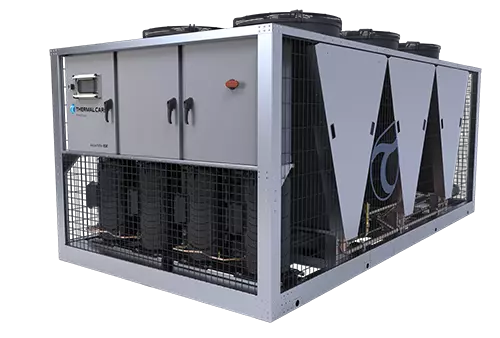
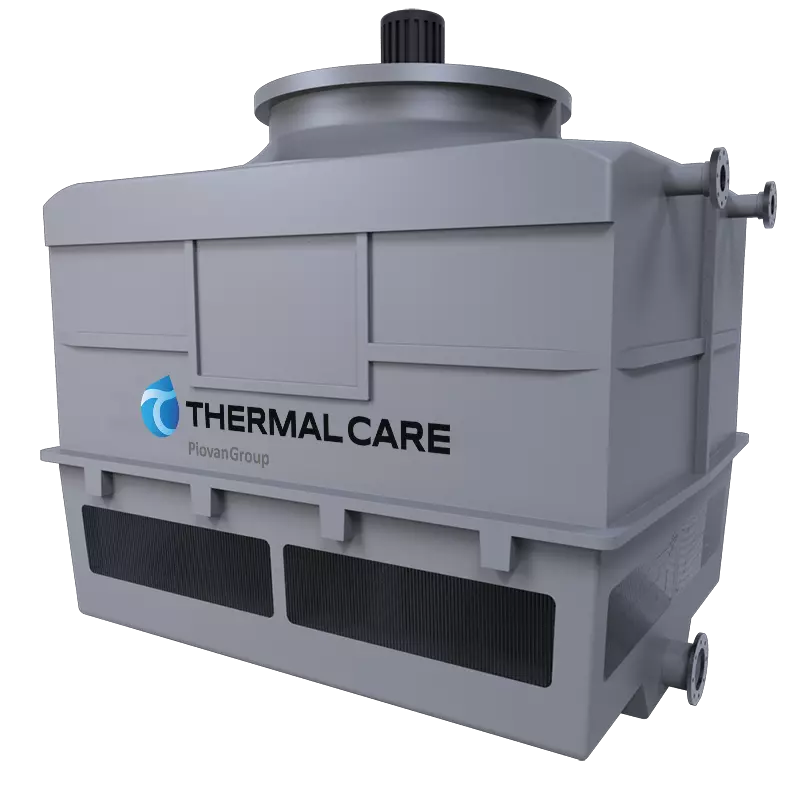
Our diverse line of cooling equipment includes glycol portable and central chillers, evaporative cooling towers, adiabatic fluid coolers as well as a full line of custom tank systems. Typical applications include cooling for breweries, wineries, cider mills, and spirits. Regardless of the size, we can provide you with the right chiller for your application.
| Glycol Chiller Applications | How Glycol Chillers are Used |
|---|---|
| Brewery Chiller | Wort Cooling Fermentation Control Crash Cooling Vessels Prepackaging Product Storage |
| Winery Chiller | Fermentation Process Cold Stabilization Room Cooling |
| Cider Mill Chiller | Fermentation Control Cold Chilling the Juice Cold Storage of the Final Product |
| Distillery Chiller | Fermentation Process Circulation Between Distillation Tanks & Stills Heat Removal |
| Kombucha Chiller | Fermentation Control Heat Removal Cold Storage of the Final Product |
Glycol Chiller Sizing Calculator for Breweries
Not Sure What Size Chiller Your Operation Needs?
Fill out our quick brewery sizing form and we will be able to provide you with the glycol chiller selection customized to your brewery process.
Active fermentation assumes 70hrs and (15) bricks per barrel, if not please specify.
Typical crash cooling from 75° to 35° in 18 hours.
Products for Brewery & Distillery